7 ACT Metaphors to Find Clarity
In therapy I use a therapeutic approach called ACT (Acceptance and Commitment Therapy). I use this lens to help clients make sense of their issues. These 7 ACT metaphors have all been used to help clients in session gain perspective, relate differently to their thoughts, and find greater clarity.
I first learned these metaphors in a training by Russ Harris, leading contributor to Acceptance and Commitment Therapy, and author of The Happiness Trap.
Therapists using an integrative approach, ACT specifically, or who want to get more acquainted with ACT can join my ACT Therapist Consultation Group for community and consultation.
Remember, ACT stands for A: Accept what is out of your personal control. C: Commit. T: To action that improves your life.
The Chinese Finger Trap
This metaphor shows how struggling can make things worse, helping clients understand that resistance causes entrapment.
Imagine your fingers are stuck in a finger trap. Your instinct is to pull away to escape, but that only makes it tighter. The way out is counterintuitive: you have to push in, creating space to gently release.
In ACT terms, the trap represents difficult thoughts and feelings, and pulling away is like struggling, avoiding, or trying to control them—which often intensifies the experience.
The key idea:
Letting go of the struggle (acceptance) creates the space needed to move forward, even if discomfort is still present.

Join my ACT Consultation Group for more support.
Leaves on a Stream
This metaphor teaches how to relate differently to thoughts.
Imagine sitting by a gently flowing stream, placing each thought you have onto a leaf, and watching it float by. Whether the thought is pleasant, painful, or repetitive, you simply notice it, place it on a leaf, and let it drift away.
It may float by quickly, or slowly, hang around, or get stuck. Simply notice without trying to alter it. Allow the stream to flow at its own rate too. You are not trying to wash the leaves away, you're allowing them to come and go in their own time, simply watching what they do.
If your thoughts pull you out of the exercise, gently acknowledge it, noticing that this is normal and natural. Then start the exercise again.
The key idea:
You don’t have to get caught up in or argue with your thoughts—you can observe them, let them come and go, and return your attention to the present moment.
Visualizing your thoughts like leaves passing by, floating down a stream, allows you to observe your thoughts without getting stuck by them. This helps to reduce their power over you and create distance between you and your thoughts. The goal is to observe your thoughts without attachment to them.

For ACT Consultation and Community join my ACT Consultation Group.
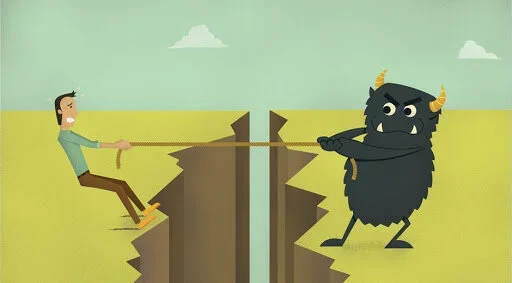
Tug-of-War with a Monster
This metaphor illustrates how to see unwanted emotions or difficult thoughts as a struggle we can put down.
Imagine you are playing tug-of-war with a monster, with a deep pit between you. The monster represents all your fears, worries, painful emotions, distressing thoughts, or unpleasant memories. You’re pulling hard to avoid being dragged in to the pit—but the monster pulls back just as hard, keeping you stuck in an exhausting, endless struggle.
Now... what else could you do to win the struggle? (Notice: if you pull harder, the monster will match your effort)
The client may say on their own to release the rope. If they don't. you can suggest... "What would happen if you released the rope?"
By letting go of the rope, the monster doesn't disappear, but it no longer controls you. And it can no longer drag you into the pit either, because you're not struggling with it. Allowing the monster to be there creates acceptance.
You can learn how to accept the monster, and all it represents, while focusing on the things that truly matter to you. You can step out of the struggle and create space for your values, relationships, and meaningful actions.
The key idea:
The way out isn’t to win the tug-of-war—it’s to drop the rope. This means letting go of the struggle with painful thoughts and feelings, so you can free up energy to move toward what matters to you.
For monthly ACT consultation calls join my ACT Consultation Group.
Quicksand
The Quicksand metaphor helps clients understand how struggling with your pain keeps you stuck there longer.
Imagine you’re stuck in quicksand. Your instinct is to struggle and fight to get out, but the more you thrash, the deeper you sink. The safer approach is to lean back, spread your weight, and move slowly, even though it feels unnatural.
Imagine the quicksand represents your fear/pain/anxiety/etc. You might start flailing your arms or struggling to get out even more. But in quicksand, this only causes you to sink faster because sudden, violent movements make the sand close around you and more difficult to move in. The best way to get out of quicksand is to float on your back, distributing your weight, so you can float on top of the mixture. Only then, can you propel yourself toward firmer ground.
Like the quicksand, the best way to get out of those unwanted internal experiences, is to drop the struggle with it. Struggling with our fear or pain makes us sink faster. Acceptance is the way out.
The key idea:
Struggling with difficult thoughts and feelings can pull you in deeper, while slowing down, making space, and responding more gently helps you regain stability and move forward.

For ACT Consultation join my Monthly Consultation Calls.
The Unwelcome Party Guest
This metaphor illustrates what happens when we try to control who shows up in our inner experience and the importance of acceptance in the service of living in line with our values.
Imagine hosting a party and someone you don't like walks in. Maybe they sneak in, ring the doorbell nonstop, or is annoying to be around. You spend the whole time arguing with them, trying to get them to leave, or keeping them out. But as a result, you miss the good parts - the delicious cake, the conversations with friends you were excited to see, and the chance to meet new people you might really connect with.
Now, imagine the unwanted party guest represents the uncomfortable "visitors" that show up in our lives, like anxiety, fear, grief, etc. They might make you want to avoid the party altogether. But the more energy you spend trying to push them away, the less present you are, and the less enjoyable the experience becomes.
When you remember that the party matters to you, you can choose a different approach. Even if the unwanted guest is still there, you can acknowledge them without letting them take over. Instead, you direct your attention to what truly matters—the moments, the people, and the connections that make the experience meaningful.
The key idea:
Trying to get rid of unwanted thoughts and feelings can take you away from living your life, while allowing them to be there (without engaging with them) lets you stay present and connected to what matters.

For more ACT support join my ACT Consultation Group for Therapists.
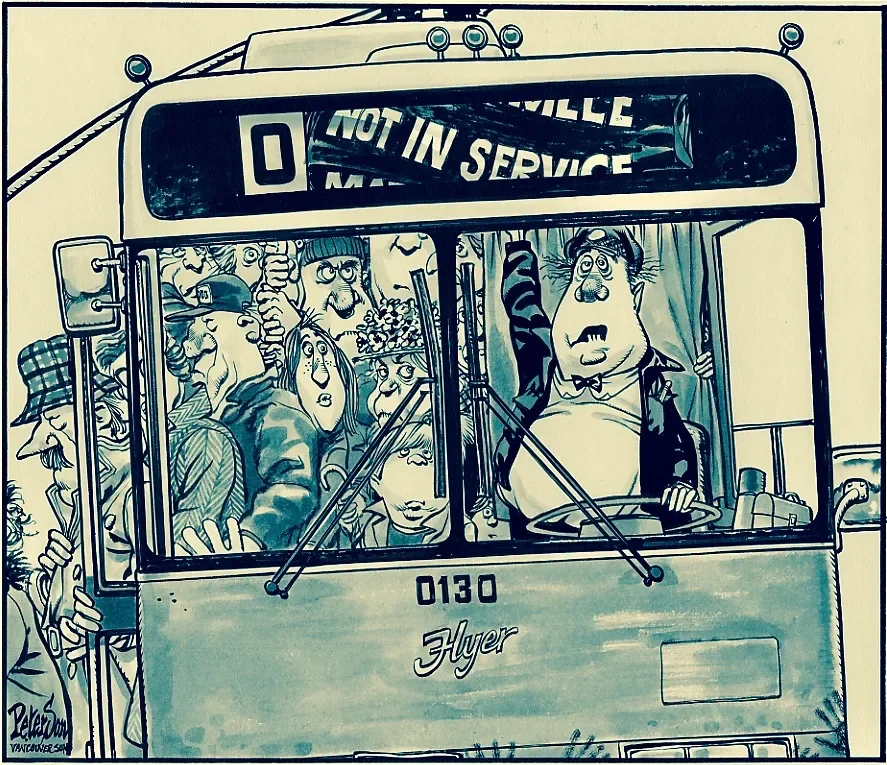
Passengers on the Bus
This metaphor illustrated how we relate to difficult thoughts and feelings.
You are the driver of the bus (your life), and your thoughts, emotions, and memories are the passengers. Some passengers are loud, critical, scary, or distracting (e.g., “You’re not good enough,” “Turn back,” “You’ll fail”).
The key idea:
Even when these passengers show up and make noise, they don’t have to control where the bus goes. You can acknowledge them, let them be there, and still drive in the direction of your values.
Instead of trying to kick the passengers off (control or avoid thoughts/feelings), ACT encourages you to make room for them while continuing forward.
Join my ACT Consultation Group for more support.
Radio Doom and Gloom
This metaphor highlights how you can tune in to the helpful thoughts and let the other chatter play there in the background.
Your mind is like a radio that's always on. Sometimes it plays helpful stuff about values, goals, and strategies to make your life fuller. Other times, it plays "Doom and Gloom FM" - negative thoughts about the past (i.e. painful memories, times people mistreated you, or when things went wrong), worries about the future (i.e. catastrophizing, predicting the worst outcome, worrying about what will go wrong or bad things that will happen), or problems in the present.
The doom and gloom broadcast is a natural and normal part of the mind. But, you can change the way you tune into it. Think about reading a book with a radio in the background. If you're focused on the book, the radio is just noise. But if you tune in, and start singing along to a song, the radio takes your attention away.
The same is true for your thoughts. You don't have to fight them or try to silence them, that often makes them louder.
Imagine trying to ignore the radio, like trying to ignore a loud voice in a restaurant, or a lawn mower outside your house. The more you try to ignore or not hear it, the more it will probably bother and disturb you.
Even if you tried to bring in another radio ("logical radio" or "rational radio" instead of "doom and gloom radio")... positive and optimistic to try to drown out radio doom and gloom... it would be very hard to engage in an activity while you've got two radios playing two different channels in the background.
Instead, just notice it and name it, non-judgmentally, "Oh, here's the radio broadcasting doom and gloom, again!" or, "There's my mind predicting the worst."
Then gently bring your attention back to what you’re doing, letting the thoughts fade into the background.
This allows you to not fight with the thoughts or get swept away or bogged down by them. Instead, you just let them come and go like a radio playing in the background. This way, they still exist, but you can focus your attention and energy on activities that are aligned with your values so you can continue to live a full and meaningful life.
The key idea:
Your thoughts are like background noise—not commands you must obey. You can notice them, let them play, and still choose how to act based on your values.

Join my ACT Consultation Group today.